
|
|
|
|
|
|
Latest National Bird News - Courtesy
of Lee G.R.Evans |
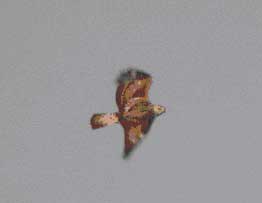
| WEDNESDAY 18TH DECEMBER The freezing temperatures on the Continent resulted in a small influx of Tundra Bean Geese, with a party of 6 in the Loch Spiggie area (Shetland) (present since 17th), 7 south over Grimston (East Yorks), 16 at North Warren RSPB, Aldeburgh (Suffolk) and 1 with Greylag Geese at Hallington Reservoirs (Northumberland). Twp also remained at Dengemarsh Road (Kent). A female American Wigeon, first discovered on 15th, was present with 6 Eurasian Wigeon at the north end of Roadford Reservoir (Devon), whilst in London, Rob Innis noted the female WHITE-HEADED DUCK again at Broadwater GP.. Wintering Lapland Buntings included 2 on Pevensey Levels (East Sussex) and singles at Deerness (Orkney) and Ardross Farm, Elie (Fife). On Shetland, the WHITE-BILLED DIVER remained off Kirkabister in South Nesting Bay (plus 29 Great Northern Divers and 33 Red-throateds). In Ireland, the 2nd-winter FORSTER’S TERN reappeared at the top of Blennerville Loch at high tide (Co. Kerry) and drake Ring-necked Ducks were noted at Derry Brick Lake and Quiddy Lake. THURSDAY 19TH DECEMBER A Lesser White-fronted Goose bearing a yellow darvic ring arrived at Martin Mere WWT (Lancs) in the afternoon, where it could be seen from Hale Hide feeding with Pink-footed Geese. It was presumably one of the birds from the Scandinavian reintroduction programme. A new Great Grey Shrike was discovered, frequenting bushes by the floodbank east of the B5014 near Handsacre (Staffs). In Kent, a Rough-legged Buzzard was seen between Sandwich Bay and Deal (and was most likely the bird reported as a Booted Eagle on 16th) and another flew east over Blakeney (Norfolk) at 11.55am. FRIDAY 20TH DECEMBER Find of the day were three first-winter drake LESSER SCAUPS on the ice-free patch of water at the west end of Auchenreoch Loch (Dumfries & Galloway). All three birds were showing well from the restaurant at NX 820 715. This is the third record of 3 birds in the UK following 3 on the Loch of Spiggie (Shetland) and 3 on Argal Reservoir, near Falmouth (Cornwall). In the West Midlands, the GREAT WHITE EGRET reappeared 1.5 miles ENE of Walsall along the Rushall Canal 400 yards from the Longwood Junction near the A454. A party of 3 Bohemian Waxwings began a lengthy stay in gardens opposite 16 Whitehouse Road, Billingham (Cleveland), whilst 4 appeared in Finstown (Orkney). Also on Orkney, Stuart Williams was the last to see the ORIENTAL TURTLE DOVE at Stromness, when it appeared very briefly in Hillside Road at 8.30am. In West Sussex, the Rough-legged Buzzard was seen again near Lewes, flying over farmland between the golf course and Mount Caburn. SATURDAY 21ST DECEMBER It was a grim day for the 20 observers that visited Orkney today (Lee Gregory, Carl Chapman, Paul Bryant, Tim Humpage, George Reszeter, Paul Gale, Jack Levene, Nick Smith, etc) as despite searching, there was no sign of the Oriental Turtle Dove all day. This superb drake Long-tailed Duck was one of several in the harbour though, and both the Iceland Gull and Ring-billed Gull were still present.
On the Isles of Scilly, the juvenile white morph GYRFALCON flew over St Martin’s at midday being pursued by one of the resident Peregrines. Two Tundra Bean Geese were seen at Cley NWT Simmonds Scrape (Norfolk),
whilst an adult Black Brant appeared at King’s Fleet, Felixstowe
Ferry (Suffolk). A drake BAIKAL TEAL was located by local birder Steve Thompson on Dix Pit, Stanton Harcourt (Oxfordshire) at about midday. It was consorting with 470 Eurasian Wigeon and was favouring the NE end of the pit. The length of the tertials was indicative of an adult male, although the general plumage of the bird was rather dull. It was not seen to leave the water so ascertaining whether it had a ring or not was not possible. It was fully-winged however, with no evidence of clipping on either wing. Unfortunately, for the main part, it kept well away from the edge of the pit, and as the wigeon flock were very skittish, the closest views the bird afforded were at about 175 yards range. About 20 of the keenest Oxfordshire birders got to the site before dark (including Ian Lewington, Nic Hallam & Justin Taylor), the bird remaining distant until dark in the NE corner. Dix Pit is located to the south of the B**** about 4 miles southwest of the A40 at Standlake. WEEKLY ROUND-UP OF SIGHTINGS ACROSS BRITAIN & IRELAND The following is a regional round-up of the rest of today’s bird news. SCOTLAND On Shetland, the adult winter WHITE-BILLED DIVER remains in South Nesting Bay, off Kirkabister, and drake American Wigeons continue at the Loch of Hillwell and at Scatness. A few Little Auks can be found on calm days scattered about the islands (particularly off Sumburgh Head). At least one American Green-winged Teal remains on the Moray Firth off Alturlie Sewage Farm, about 6 miles east of Inverness. The wintering Great Grey Shrike remains about the clearing at Mondhuie Wood, just west of Nethybridge (Speyside), whilst good numbers of Crested Tits are to be found in the Loch Garten area, including 6 around the Loch Mallachie nature trail car park and several in the tangled undergrowth and pines to the left of the road between the Tulloch turning and Nethybridge. Scottish Parrot Crossbills are also present in small numbers in this area. In Moray & Nairn, the regular returning adult drake Smew remains at Loch Flemington, whilst in the Burghead Bay area, good numbers of Long-tailed Duck and Velvet Scoter can be found, with several coveys of Grey Partridge in the Roseisle area. At least one adult drake Surf Scoter has been seen recently off the Nairn Bar. In neighbouring Aberdeenshire, up to 18 Bohemian Waxwings can be found feeding on Cotoneaster berries in the Union Street area of the City Centre, the two Black-throated Divers remain on Loch of Strathbeg RSPB (an adult and a juvenile) viewable from the Fen Hide and an adult Iceland Gull has been showing well at the mouth of the River Ugie at Peterhead. In the North Lanarkshire and Falkirk District, up to 231 wintering Taiga Bean Geese remain in the Fannyside Loch area, whilst in Fife, three wintering drake Surf Scoters can be found during calm weather off Ruddons Point, Largo Bay, along with small numbers of Red-necked and Slavonian Grebes (park by the gate at the entrance to the caravan park). Elsewhere, two redhead Smew are at Vane Farm RSPB (with a drake at Carriston Reservoirs) and the drake Red-crested Pochard remains with Northern Pochard on Kilconquhar Loch. A Little Egret has been seen recently at Vane Farm RSPB, Loch Leven. In East Lothian, up to 7 Mediterranean Gulls have been seen amongst the
roosting gulls at Musselburgh River Mouth, whilst Gullane Bay offers up
to 20 wintering Red-necked Grebes. The drake Red-crested Pochard of suspect
origin continues to survive on Linlithgow Loch. In Dumfries & Galloway, the wintering flock of 236 Greenland White-fronted Geese can be located on the west side of Loch Ken (between the RSPB car park and the layby at Livingstone) and the area should also produce Red Kite and Willow Tit. The adult ROSS’S SNOW GOOSE remains with Barnacle Geese at Caerlaverock WWT. At Loch Ryan, 111 Red-throated Divers, 1 Great Northern Diver, 1 Black-necked Grebe, 31 Slavonian Grebe, 25 Pale-bellied Brent Geese, 190 Common Scoter, 2 Velvet Scoter, 907 Greater Scaup and 55 Black Guillemots are all wintering (Paul Collin), but there has been no recent reports of the drake King Eider seen just twice since September. NORTHWEST ENGLAND In Lancashire, the adult drake American Wigeon can be found on the east side of the Wyre Estuary at Barnaby’s Sands (viewable from the public footpath 1.25 miles NW of the Wyre Ecology Centre in Stanah); the American Green-winged Teal, female Ferruginous Duck, Lesser Snow Goose (perhaps of suspect origin), 1,500 Whooper Swans, 70 Bewick’s Swans, 6,000 Pink-footed Geese, 125 Ruff and two Firecrests can all be found at Martin Mere WWT and the Red Kite remains at Dunsop Bridge at SD 685 503 1.75 miles east of the village. At Leighton Moss RSPB, a single Water Pipit is overwintering and is often in front of Lilian’s Hide (also two Bitterns there), whilst nearby, up to 7 Hawfinches are being seen at Woodwell, near Silverdale (in the vicinity of the house named ‘Fir Trees’). Up to 41 Common Crossbills have been showing well in Thrushgill Plantation, 4 miles SE of Wray. At Marton Mere, up to 5 Bitterns there have been regularly observed at dusk catching Starlings as they come in to roost in the reedbeds. In Cheshire, a Black-throated Diver remains at Rostherne Mere (viewable from the rear of the churchyard on the south side); 5 Water Pipits are wintering at Neston Old Quay (with 29 Bewick’s Swans nearby on Burton Marsh) and the American Green-winged Teal continues at Inner Marsh Farm RSPB reserve. Two Bitterns have been present in the Coward Memorial reedbed at the west end of Budworth Mere and 3 Snow Buntings have been regularly seen 100 yards west of the Lifeboat Station at the end of Harrison Drive in Wallasey. In Cumbria, flocks of 220 and 210 Twite can be found respectively at Grune Point and South Walney NR, whilst the American Green-winged Teal remains at Campfield Marsh RSPB on the Inner Solway (and up to 8,000 Barnacle Geese nearby along the South Solway shore). Three Short-eared Owls are wintering at Burgh Marsh. In Greater Manchester, Willow Tits continue to be the main attraction at Pennington Flash Country Park, attending feeding stations there from Bunting Hide, whilst 6 more are a daily feature on the feeding station behind Hawkley Hall School on the Wigan Flashes at SD 580 033. A single Bittern has also been seen regularly at the latter site in the Hawkley Hall reedbed and the nearby Scotman’s Flash. Three Egyptian Geese remain at Etherow Country Park. NORTHEAST ENGLAND The main attractions in Yorkshire include the wintering flock of up to 22 Shore Larks at Staithes, at least 2 Lapland Buntings in stubble north of Aldbrough, 5 Smew at Fairburn Ings, a juvenile Black-throated Diver on the boating lake at Pugney’s CP and an impressive flock of 500 Bramblings in beech trees in the SW corner of Ingbirchworth Reservoir. Up to 3 Bitterns are roosting at dusk in the reeds by the boathouse at Wintersett Reservoir (with another wintering at Piper’s Marsh, Potteric Carr YWT). North Duffield Carrs has 60 wintering Whooper Swans and 30 Tree Sparrows, whilst a Long-tailed Duck remains at Tophill Low NR.
An immature female Long-tailed Duck can be found on the Shotton Rifle
Range Pools (Flintshire) (at SJ 298 722), whilst nearby, 40 Twite are
wintering on the saltmarsh at Flint Castle. In South Wales, highlights include the ever-elusive drake REDHEAD on Kenfig Pool NNR (East Glamorgan) (plus Great Northern Diver, redhead Smew and 2 Bitterns), two Eurasian Spoonbills, 3 Spotted Redshank and a regular Northern Goshawk at Penclacwydd WWT (Carmarthenshire), up to 15 Mediterranean Gulls in Swansea Bay (Gower) and a wintering Great Grey Shrike in Glasfynydd Forest by Usk Reservoir (Powys). A SIBERIAN CHIFFCHAFF remains with Common Chiffchaffs at Pen-clawwd Sewage Works (Glamorgan). MIDLANDS REGION In Staffordshire, wintering Smew include a redhead at Dosthill GP (Warks) and 3 at Barton GP. The Cetti’s Warbler remains by the Gazebo Hide at Belvide Reservoir. A fairly elusive Great Grey Shrike is present for its 3rd day at Handsacre, 3 miles SE of Rugeley (favouring the area 200 yards east of the Trent river bridge). In Derbyshire, a first-winter CASPIAN GULL has been regular in the roost at Ogston Reservoir and the long-staying Great Northern Diver remains at Carsington Water. A Black-necked Grebe is present at the south end of Staunton Harold Reservoir. Neighbouring Nottinghamshire hosts a SIBERIAN CHIFFCHAFF and 3 Firecrests at Colwick CP, and a drake Smew at Hoveringham GP whilst Leicestershire continues to have the Red-throated Diver at Cropston Reservoir and the Red-necked Grebe at Eyebrook Reservoir. A ringtail Hen Harrier has been present for over a week at Cossington GP, favouring the rough field opposite the sewage works adjacent to North Pit at SK 595 135. The selection of birds on offer at Rutland Water include 2 Slavonian Grebes (off the dam), 2 Red-breasted Mergansers in South Arm III off Old Hall, a drake and 2 female Greater Scaup and 4 Smew from Lapwing Hide and 2 Short-eared Owls from Harrier Hide.
Slimbridge WWT (Gloucestershire) has wintering Bewick’s Swans (100), European White-fronted Geese (500), Peregrine (4) and Ruff (11). In Bedfordshire, the female Ferruginous Duck is present for its fourth winter at Elstow Clay Pit, just south of Bedford, whilst at nearby Willington GP, a drake Smew and up to 7 Jack Snipes are present. The Peregrines have returned to their wintering roost sites in Bedford Town Centre. A Dark-bellied Brent Goose has been favouring a field of Broccolli on the Potton-Biggleswade road, just beyond the laundry at TL 202 463. EAST ANGLIA Titchwell RSPB reserve offers an excellent selection of species, including the ever-present male BLACK-WINGED STILT (generally on the main freshwater lagoon or saltmarsh pool to the west of the footpath), 100+ Ruff, 400+ European Golden Plover, Icelandic Black-tailed Godwits, 1-3 Spotted Redshanks, 15 Pintail, Water Rail, Brambling (at the feeding station), Hen Harrier, Merlin, Barn Owl and up to 36 roosting Little Egrets. Nearby, the adult ROSS’S SNOW GOOSE continues to favour fields inland of Brancaster, where a flock of several thousand Pink-footed Geese are grazing beet fields. The odd Barnacle Goose is also present with the flock, the wintering population in Norfolk exceeding 79,000 birds this winter! In Wells Harbour, the very confiding first-winter Shag remains in the quay, whilst Holkham Gap offers a wintering flock of up to 44 Shore Lark, 22 Skylark, 40 Twite and 40 Goldfinch (a Merlin has been successfully hunting the saltmarsh in the past week). Up to 76 European White-fronted Geese are on the Freshmarsh, as well as 46 roosting Little Egrets On the Northeast coast, a female SURF SCOTER continues to be seen daily, generally with Eider off Sea Palling in the morning before moving south to feed off Horsey Gap and Waxham with Common Scoter later in the day. The Stubb Mill roost at Hickling NWT has regularly been producing up to 11 Common Cranes, 22 March Harriers, 7 Hen Harriers, 4 Merlins, 3 Sparrowhawks, 3 Barn Owls, Woodcocks and a mixture of wild swans. An adult Little Gull remains in the ploughed field by the airstrip at Northrepps. In the Great Yarmouth area, 22 Mediterranean Gulls are wintering on North Beach being regularly attracted to scraps behind the Sealife Centre, whilst the coastline between the harbour mouth south to Suffolk holds vast numbers of wintering Red-throated Divers. Up to 108 TAIGA BEAN GEESE remain in the Yare Valley, favouring the Cantley Marshes viewable from Burnthouse Lane, whilst 3 Water Pipits are wintering nearby on the beet factory lagoons (£1.00 access charge at the entrance gate). Nine Golden Pheasants remain in Wayland Wood. In Suffolk, at least one Rough-legged Buzzard remains on Orfordness, favouring the Lantern Marshes, the area also producing regular Peregrine, Hen Harrier, Marsh Harrier and Short-eared Owl. Up to 5 Short-eared Owls also still remain at Shingle Street. Benacre Broad and Pits have hosted several partially oiled Red-throated Divers in recent weeks, with perhaps 3,000 or more wintering offshore between Orford and Lowestoft. Five Shags can be readily seen in Lake Lothing, Lowestoft, whilst Water Pipits have been a regular feature on the main scrape at Minsmere RSPB. Two Greater Scaup and a Mandarin Duck are present at Alton Water. In nearby Ipswich Wet Dock, 2 Red-throated Divers and two first-winter Shags are present. Cambridgeshire has benefited from the recent cold spell with Grafham Water hosting a juvenile Red-throated Diver and Red-necked Grebe (best viewed from by the lagoons on the south side) and Paxton Pits up to 15 Smew (mainly on Heronry South Pit) and another Red-necked Grebe (on the sailing pit just north of the information centre). The long-staying Slavonian Grebe remains on Holywell Lake, Fen Drayton Pits, with 2 Bitterns putting in appearances there too, and up to 12 Smew on Swavesey Lake. Three Short-eared Owls continue to hunt late afternoon over the Trout Lake. Up to 30 Short-eared Owls continue on the Nene Washes, mainly in the Eldernell area. Godmanchester Gravel Pits has attracted 1-3 CASPIAN GULLS on several occasions in the past week, whilst the White Stork of possibly suspect origin remains in the damp fields immediately north of the pools along Cottenham Long Drove (as well as 270 Fieldfares). The Great Grey Shrike continues to frequent the wires and hedges between Hinxton and Duxford (park by the swollen ford just NW of Hinxton and check fields to the south of the railway) (also good for Woodcock and Kingfisher). A Hawfinch has once again appeared in the trees behind Ham Farm, Ferry Meadows CP, Peterborough. The best birds in Essex continue to be the adult Ring-billed Gull in Westcliff-on-Sea (in the vicinity of Rossi’s Ice Cream Parlour on the Esplanade at high tide) (also up to 15 Mediterranean Gulls between there and the pier), the Black Brant in the Wivenhoe area and the Shore Lark at Cudmore Grove CP. Two adult Mediterranean Gulls remain on Walton-on-the-Naze Pier, with three Barn Owls hunting regularly between Frinton and Holland Haven. A Black-necked Grebe, 6 Smew and 70 Goosander are present at Abberton Reservoir. SOUTHEAST ENGLAND Some 10 Goosander are wintering at Stockers Lake, with 3-10 Little Egrets, 80+ Ruddy Ducks and 6 Smew nearby at Broadwater GP (South Bucks). Up to 38 Red Kite can be observed between High Wycombe and Oxford (largely from the M40 but particularly around Stokenchurch). Five Little Egrets have returned to the River Chess at Latimer/Chenies In North Kent, 1-2 wintering Rough-legged Buzzards remain on the Isle of Sheppey, where they continue to hunt over farmland at Capel Fleet. This area also has several wintering Marsh and Hen Harriers, Merlin, Peregrine and Short-eared Owl, with a small flock of Bewick’s Swans on Elmley RSPB reserve. Up to 127 Corn Buntings have been a regular feature at Bromhey Farm, Northward Hill, whilst 200+ Avocets remain on the River Thames off Cliffe Alpha Pools. The New Hythe complex of pits have 8 wintering Smew, a wintering Bittern and a drake and 2 female Red-crested Pochards (in the NE arm of the Windsurfing Pit at Leybourne Lake), whilst the wintering flock of Mediterranean Gulls at Copt Point, Folkestone, number at least 17. Two Slavonian Grebes remain at Cliffe Pools RSPB on the pool behind the ski-pit (best viewed from the watchpoint at TQ 729 766). The Dungeness area has the two wintering Long-tailed Ducks on the New Diggings, up to 180 Ruddy Ducks, a pair of Tundra Bean Geese, at least 24 Smew, 6 Mediterranean Gulls, several Red-throated Divers and the odd Bittern, whilst nearby Scotney GP, has single Great Northern Diver, Red-throated Diver and Red-necked Grebe. The family herd of 8 Whooper Swans remain with Mute Swans in fields south of Dengemarsh Lane. In Central London, 3-4 Firecrests are present in Leafyard Wood, Regent’s Park (with a late and 2-3 Bitterns have been showing well at Barnes WWT Wetland Centre from Wildside Hide; A Slavonian Grebe is present on King George V Reservoir. A first-winter CASPIAN GULL has been noted at Beddington Sewage Farm (Surrey), with some 1,000+ Ring-necked Parakeets roosting nightly in the tall Poplars near Esher Rugby Club. The female RING-NECKED DUCK has appeared for its second consecutive winter on Bourne Hall Lake, Ewell (TQ 219 628), whilst the wintering Great Grey Shrike remains faithful to Shrike Hill, Thursley Common. A single juvenile Great Northern Diver remains on King George VI Reservoir (permit access only). Up to 5 Short-eared Owls continue to patrol Staines Moor (Middlesex). In Berkshire, the Red-necked Grebe remains at Woolhampton GP, a first-winter Greater Scaup is at Horton GP from Park Lane and 13 Smew and 7 Goosander range over the Wraysbury Pit Complex. A Bittern has returned to the reedbed at the west end of Hosehill Lake LNR, Theale, whilst nearby, a Slavonian Grebe is present on Burnthouse Lane GP.. The Great Grey Shrike continues to be seen at Arundel WWT (West Sussex) on the east side of the River Arun by the sluice; whilst the Rye Harbour NR has 2-3 Bitterns and 6 Smew at Northpoint GP. The wintering Rough-legged Buzzard, although elusive, can be located on days of good visibility from the summit of Mount Caburn at TQ 444 086, 2 miles east of Lewes. Three Purple Sandpipers are wintering around the harbour entrance at Shoreham-by-Sea (and a Black Redstart). The two adult Mediterranean Gulls are still coming to bread at Mewsbrook Lake, Littlehampton. On the Isle of Wight, Bembridge Ponds and Brading Marsh RSPB offer the best winter birding at the moment, with Bittern, male Marsh Harrier, 2 Hen Harriers, Merlin, Short-eared Owl and Water Pipit being regularly seen, whilst in Hampshire, 12 Black-necked Grebes are wintering in the Langstone Channel, Great Grey Shrikes are wintering at Black Gutter Bottom and Pitts Wood and Hawfinches are roosting at Pitts Wood and Rhinefield Enclosure. SOUTHWEST ENGLAND Cornwall continues to host two surviving first-winter ROSE-COLOURED STARLINGS – one in gardens close to the Crown Pub in Goldsithney village and the other along Greenmarket in Penzance town centre. Several Ring-billed Gulls are being seen, with a fairly reliable adult west of Sennen just north of the B3315 junction with the A30. A drake American Green-winged Teal, Common Sandpiper, 2 Common Greenshank and 8 Little Egrets remain on the Hayle Estuary.. Two Black Redstarts continue to frequent Little London Beach, Marazion, whilst the Long-tailed Duck has returned to Drift Reservoir (also 5 Greater Scaup there). A Black-necked Grebe remains at the north end of Helston Loe Pool, whilst 25 birds were counted in the Carrick Roads off Mylor to the north of Falmouth. The Isles of Scilly offer 3-4 Firecrests, 9 Lapwings in the Telegraph area, up to 8 Common Gulls and up to 10 wintering Great Northern Divers. In Devon, the long-staying GLOSSY IBIS continues to roost each night at Bowling Green Marsh, Topsham, along with 4 first-winter Eurasian Spoonbills. The adjacent River Exe has a wintering flock of some 280 Avocets. A party of 12 Velvet Scoters remain off Dawlish Warren NNR, whilst several Black-necked Grebes are wintering in Babbacombe Bay, Paignton. In North Devon, the adult Ring-billed Gull continues at the Brethren Lorry Park at Barnstaple and 5 Eurasian Spoonbills winter at Isley Marsh. In Dorset, the drake LESSER SCAUP (paired up to a female Greater Scaup) has returned to Littlesea, Studland, with the area also hosting a single Eurasian Spoonbill, 12 Greater Scaup and a selection of scarce grebes and divers. Up to 11 Short-eared Owls remain on Portland Bill, as well as 2 Black Redstarts. In Portland Harbour, up to 3 Black-throated Divers, a single Great Northern Diver and up to 8 Black-necked Grebes are present. The drake Ferruginous Duck remains at Morden Park Lake, whilst two wintering Sandwich Terns have been seen regularly in Poole Harbour (opposite Luscombe Valley Reserve at SZ 043 890 on 22nd). The Red-necked Grebe, Smew and Water Pipit remain at Chew Valley Lake (Avon) (with a juvenile Great Northern Diver off Moreton Bank there on 15th) In Somerset, a drake Smew remains at Blagdon Lake If you have any news or photographs to enhance this regular feature, please Email them to LGRE at LGREUK400@aol.com. Furthermore, if you require clarification of any sightings or further details on how to see them, please do not hesitate to contact me.
|